Problem Solvers
The Paint Problem Solver is a comprehensive guide that provides detailed information on most types of paint problems. Organized into interior and exterior categories, each paint problem includes a photo for better identification. The 'cause' and 'solution' information enables you to address the situation and prevent it from reoccurring.
Depending on your paint issue, select from the 'Interior' or 'Exterior' links and start the process to obtain a quality paint finish.
GENERAL PROBLEMS - PRINTING
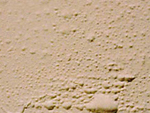
BLISTERING
-
Bubbles resulting from localized loss of adhesion and lifting of the paint film from the underlying surface.
Possible Causes:
- Applying oil-based or alkyd paint over a damp or wet surface.
- Moisture seeping into the home through the exterior walls (less likely with latex paint)
- Exposure of latex paint film to high humidity or moisture shortly after paint has dried, especially if there was inadequate surface preparation.
Solution:
- If blisters do not go all the way down to the substrate: Remove blisters by scraping and sanding, and repaint with a quality acrylic latex interior paint.
- If blisters go down to the substrate: Remove the source of moisture, if possible. Repair loose caulking; consider installing vents or exhaust fans. Remove blisters as above, remembering to prime before applying the top coat.
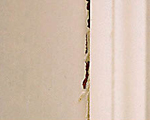
BLOCKING
-
Undesirable sticking together of two painted surfaces when pressed together (e.g, a door sticking to the jamb).
Possible Causes:
- Not allowing sufficient dry time for the coating before closing doors or windows.
- Use of low quality semigloss or gloss paints.
Solution:
Use top quality semigloss or gloss acrylic latex paint. Low quality latex paints can have poor block resistance especially in warm, damp conditions. Follow paint label instructions regarding dry times. Acrylic latex paints generally have better early block resistance than vinyl latex paints, or alkyd or oil-based paints; however, alkyds develop superior block resistance over time. Application of talcum powder can relieve persistent blocking.
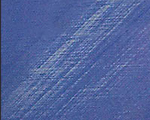
BURNISHING
-
Increase in gloss or sheen of paint film when subjected to rubbing, scrubbing or having an object brush up against it.
Possible Causes:
- Use of flat paint in highly trafficked areas, where a higher sheen level would be desirable
- Frequent washing and spot cleaning.
- Objects (furniture, for example) rubbing against walls.
- Use of lower grades of paint with poor stain and scrub resistance (see POOR STAIN RESISTANCE and POOR SCRUB RESISTANCE).
Solution:
Paint heavy wear areas that require regular cleaning (e.g., doors, window sills, and trim) with a top quality latex paint, because this type of paint offers both durability and easier cleaning capability. In high traffic areas, choose a semigloss or gloss rather than a flat sheen level. Clean painted surfaces with a soft cloth or sponge and non-abrasive cleaners; rinse with clean water.
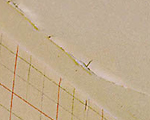
CRACKING / FLAKING
-
The splitting of a dry paint film through at least one coat as a result of aging, which ultimately will lead to complete failure of the paint. In its early stages, the problem appears as hairline cracks; in its later stages, flaking occurs.
Possible Causes:
- Use of lower quality paint that has inadequate adhesion and flexibility.
- Overthinning or overspreading the paint.
- Inadequate surface preparation, or applying the paint to bare wood without first applying a primer.
- Excessive hardening and embrittlement of alkyd paint as the paint job ages.
Solution:
Remove loose and flaking paint with a scraper or wire brush, sanding the surface and feathering the edges. If the flaking occurs in multiple layers of paint, use of a filler may be necessary. Prime bare wood areas before painting. Use of a top quality primer and top coat should prevent a recurrence of the problem.
FOAMING / CRATERING
-
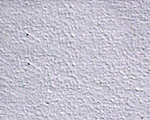
Formation of bubbles (foaming) and resulting small, round concave depressions (Cratering) when bubbles break in a paint film, during paint application and drying.
Possible Causes:
- Shaking a partially filled can of paint.
- Use of low quality paint or very old latex paint.
- Applying (especially rolling) paint too rapidly.
- Use of a roller cover with wrong nap length.
- Excessive rolling or brushing of the paint.
- Applying a gloss or semigloss paint over a porous surface.
Solution:
All paints will foam to some degree during application; however, higher quality paints are formulated so the bubbles break while the paint is still wet, allowing for good flow and appearance. Avoid excessive rolling or brushing of the paint or using paint that is more than a year old. Apply gloss and semigloss paints with a short nap roller, and apply an appropriate sealer or primer before using such paint over a porous surface. Problem areas should be sanded before repainting.
MUD CRACKING
-
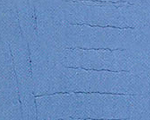
Deep, irregular cracks resembling dried mud in dry paint film.
Possible Causes:
- Paint is applied too thickly, usually over a porous surface.
- Paint is applied too thickly, to improve inherent poor hiding (coverage) of a lower quality paint. .
- Paint is allowed to build up in corners upon application.
Solution:
Remove coating by scraping and sanding. Prime and repaint, using a top quality latex paint. Mud-cracked areas can also be repaired by sanding the surface smooth before repainting with a top quality latex paint. This type of paint is likely to prevent recurrence of mud cracking, because it is relatively more flexible than alkyd paint, oil-based paint and ordinary latex paint. Quality paints have a higher solids content, which reduces the tendency to mud crack. They also have very good application and hiding properties, which minimize the tendency to apply too thick a coat of paint.
PICTURE FRAMING
-
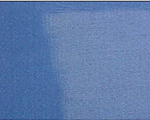
An effect of non-uniform color that can appear when a wall is painted with a roller, but is brushed at the corners. The brushed areas generally appear darker, resembling the "frame" of a "picture". Also, sprayed areas may be darker than neighboring sections that are brushed or rolled. Picture framing can also refer to sheen effects.
Possible Causes:
- Usually a hiding (coverage) effect. Brushing will generally result in lower spread rates than rolling, producing a thicker film and more hiding.
- Adding colorant to a non-tintable paint or using the wrong type or level of colorant.
Solution:
Make sure that spread rates with brushes and rollers are similar. Don't cut in the entire room before roller coating. Work in smaller sections of the room to maintain a "wet edge". With tinted paints, be sure the correct colorant-base combinations are used. Factory colors, as well as in-store tints, should be thoroughly shaken at time of sale.
POOR FLOW / LEVELING
-
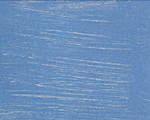
Failure of paint to dry to a smooth film, resulting in unsightly brush and roller marks after the paint dries.
Possible Causes:
- Use of lower quality paint.
- Application of additional paint to "touch-up" partially dried painted areas.
- Re-brushing or re-rolling partially dried painted areas.
- Use of the wrong type of roller cover or poor quality brush.
Solution:
Use top quality latex paints, which are generally formulated with ingredients that enhance paint flow. Brush and roller marks thus tend to "flow out" and form a smooth film. When using a roller, be sure to use a cover with the recommended nap length for the type of paint being used. Use of a high quality brush is important; a poor brush can result in bad flow and leveling with any paint.
POOR HIDING
-
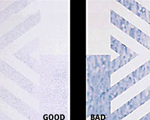
Failure of dried paint to obscure or "hide" the surface to which it is applied
Possible Causes:
- Use of a low quality paint.
- Use of a low quality tools/wrong roller cover.
- Use of an improper combination of tinting base and tinting color
- Poor flow and leveling (see POOR FLOW / LEVELING)
- Use of paint that is much lighter in color than the substrate, or that primarily contains low-hiding organic pigments.
- Application of paint at a higher spread rate than recommended.
Solution:
Make sure that spread rates with brushes and rollers are similar. Don't cut in the entire room before roller coating. Work in smaller sections of the room to maintain a "wet edge". With tinted paints, be sure the correct colorant-base combinations are used. Factory colors, as well as in-store tints, should be thoroughly shaken at time of sale.
POOR PRINT RESISTANCE
-
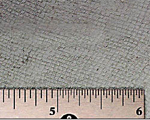
Tendency of paint film to take on the imprint of an object that is placed on it (e.g., a shelf, table, window sill or countertop with books, dishes, and other objects on them).
Possible Causes:
- Use of low quality semigloss or gloss paint.
- Putting a painted surface back into use before paint has fully dried.
Solution:
Use a top quality acrylic semigloss or gloss latex paint. Low quality latex semigloss and gloss paints can have poor print resistance, especially in warm, damp conditions. Acrylic latex paints generally have better print resistance than vinyl latex paints. Fully cured alkyd paints also have excellent print resistance. Make sure the recommended "cure" time is allowed for the paint before it is put into service. Cool or humid conditions require more curing time.
POOR STAIN RESISTANCE
-
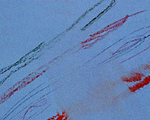
Failure of the paint to resist absorption of dirt and stains.
Possible Causes:
Solution:
Higher quality latex paints contain more binder, which helps prevent stains from penetrating the painted surface, allowing for easy removal. Priming new surfaces provides maximum film thickness of a premium top coat, providing very good stain removability.
ROLLER MARKS / "STIPPLE"
-
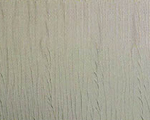
Unintentional textured pattern left in the paint by the roller.
Possible Causes:
- Use of incorrect roller cover.
- Use of lower grades of paint.
- Use of low quality roller.
- Use of incorrect rolling technique.
Solution:
Use the proper roller cover; avoid too long a nap for the paint and the substrate. Use quality rollers to ensure adequate film thickness and uniformity. High quality paints tend to roll on more evenly due to their higher solids content and leveling properties. Pre-dampen roller covers used with latex paint; shake out excess water. Don't let paint build up at roller ends. Begin rolling at a corner near the ceiling and work down the wall in three-foot square sections. Spread the paint in a zigzag "M" or "W" pattern, beginning with an upward stroke to minimize splatter; then, without lifting the roller from the surface, fill in the zigzag pattern with even, parallel strokes.
WRINKLING
-
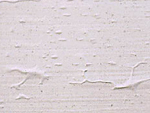
A rough, crinkled paint surface, which occurs when uncured paint forms a "skin".
Possible Causes:
- Paint is applied too thickly (more likely when using alkyd or oil-based paints).
- Painting during extremely hot weather or cool damp weather, which causes the paint film to dry faster on top than on the bottom.
- Exposing uncured paint to high humidity levels
- Painting over contaminated surface (e.g., dirt or wax)
Solution:
Scrape or sand substrate to remove wrinkled coating. If using a primer, allow it to dry completely before applying top coat. Repaint (avoiding temperature/humidity extremes), applying an even coat of top quality interior paint.
YELLOWING
-
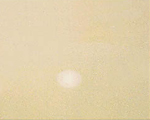
Development of a yellow cast in aging paint; most noticeable in the dried films of white paints or clear varnishes.
Possible Causes:
- Oxidation of alkyd or oil-based paint or varnish.
- Heat from stoves, radiators and heating ducts.
- Lack of light (e.g., behind pictures or appliances, inside closets, etc.)
Solution:
Top quality paints do not tend to yellow, nor does non-yellowing varnish. Alkyd paints, because of their curing mechanism, do tend to yellow, particularly in areas that are protected from sunlight.
REMEDIES FOR COMMON PAINT PROBLEMS
EXTERIOR
ALLIGATORING
-
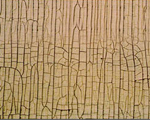
Patterned cracking in the surface of the paint film resembling the regular scales of an alligator.
Possible Causes:
- Application of an extremely hard, rigid coating, like an alkyd enamel, over a more flexible coating, like a latex primer.
- Application of a top coat before the undercoat is dry.
- Natural aging of oil-based paints as temperatures fluctuate. The constant expansion and contraction results in a loss of paint film elasticity.
Solution:
Old paint should be completely removed by scraping and sanding the surface; a heat gun can be used to speed work on large surfaces, but take care to avoid igniting paint or substrate. The surface should be primed with a high quality latex or oil-based primer, then painted with a top quality exterior latex paint.
CHALKING
-
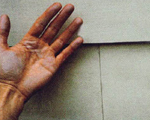
Formation of fine powder on the surface of the paint film during weathering, which can cause color fading. Although some degree of chalking is a normal, desirable way for a paint film to wear, excessive film erosion can result in heavy chalking.
Possible Causes:
Solution:
First, remove as much of the chalk residue as possible, using a stiff bristle brush (or wire brush on masonry) and then rinse thoroughly with a garden hose; or use power washing equipment. Check for any remaining chalk by running a hand over the surface after it dries. If noticeable chalk is still present, apply a quality oil-based or acrylic latex primer (or comparable sealer for masonry), then repaint with a quality exterior coating; if little or no chalk remains and the old paint is sound, no priming is necessary.
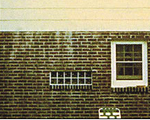
CHALK RUN-DOWN
-
The washing down of chalk from an excessively eroding paint onto another area below (a brick foundation, for example), ruining its appearance (see CHALKING).
Possible Causes:
- Use of a lower quality, highly pigmented paint.
- Use of an interior paint for an outdoor application.
- Erosion of factory-finished metal siding.
Solution:
Remove as much of the chalk residue as possible (see CHALKING). Scrub any stained areas with a stiff brush, using a detergent solution; rinse thoroughly. In cases of severe staining, an acid wash may be necessary. Either way, if the affected area dries to a different color, consider painting it with a quality latex paint. Eroding aluminum siding should be thoroughly cleaned (power washing recommended) before painting with a quality exterior latex paint.
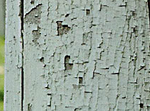
CRACKING / FLAKING
-
The splitting of a dry paint film through at least one coat, which will lead to complete failure of the paint. Early on, the problem appears as hairline cracks; later, flaking of paint chips occurs.
Possible Causes:
- Use of a lower quality paint that has inadequate adhesion and flexibility.
- Overthinning the paint or spreading it too thin.
- Poor surface preparation, especially when the paint is applied to bare wood without priming.
- Painting under cool or windy conditions that make latex paint dry too fast.
Solution:
It may be possible to correct cracking that does not go down to the substrate by removing the loose or flaking paint with a scraper or wire brush, sanding to feather the edges, priming any bare spots and repainting.
If the cracking goes down to the substrate, remove all of the paint by scraping, sanding and/or use of a heat gun; then prime and repaint with a quality exterior latex paint.
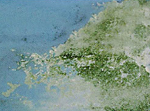
EFFLORESCENCE / MOTTLING
-
Crusty, white salt deposits, leached from mortar or masonry as water passes through it.
Possible Causes:
- Failure to adequately prepare surface by removing all previous efflorescence.
- Excess moisture escaping through the exterior masonry walls from the inside.
Solution:
If excess moisture is the cause, eliminate the source by repairing the roof, cleaning out gutters and downspouts, and sealing any cracks in the masonry with a high quality, water-based all-acrylic or siliconized acrylic caulk. If moist air is originating inside the building, consider installing vents or exhaust fans, especially in kitchen, bathroom, and laundry areas. Remove the efflorescence and all other loose material with wire brush, power brush, or power washer; then thoroughly rinse the surface. Apply a quality water-based or solvent-based masonry sealer and allow it to dry completely; then apply a coat of top quality exterior house paint, masonry paint or elastomeric wall coating.
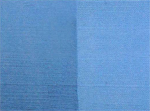
FADING / POOR COLOR RETENTION
-
Premature and/or excessive lightening of the paint color, which often occurs on surfaces with sunny southern exposure. Fading/poor color retention can also be a result of chalking of the coating.
Possible Causes:
- Use of an interior grade of paint for an outdoor application.
- Use of a lower quality paint, leading to rapid degradation (chalking) of the paint film.
- Use of a paint color that is particularly vulnerable to UV radiation (most notably, certain bright reds, blues, and yellows).
- Tinting a white paint not intended for tinting, or overtinting a light or medium paint base.
Solution:
When fading/poor color retention is a result of chalking, it is necessary to remove as much of the chalk as possible (see CHALKING). In repainting, be sure to use a quality exterior house paint in colors recommended for exterior use.
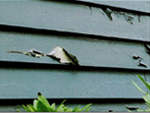
PEELING
-
Loss of paint due to poor adhesion. Where there is a primer and top coat, or multiple coats of paint, peeling may involve some or all coats.
Possible Causes:
- Seepage of moisture through uncaulked joints, worn caulk or leaks in roof or walls.
- Excess moisture escaping through the exterior walls (more likely if paint is oil-based).
- Inadequate surface preparation.
- Use of lower quality paint.
- Applying an oil-based paint over a wet surface.
- Earlier blistering of paint (see BLISTERING).
Solution:
Try to identify and eliminate cause of moisture (see EFFLORESCENCE/MOTTLING). Prepare surface by removing all loose paint with scraper or wire brush, sand rough surfaces, prime bare wood. Repaint with a top quality acrylic latex exterior paint for best adhesion and water resistance.
POOR ALKALI RESISTANCE
-
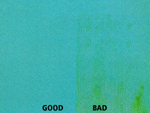
Color loss and overall deterioration of paint film on fresh masonry.
Possible Causes:
Oil-based paint or vinyl acrylic latex paint was applied to new masonry that has not cured for a full year. Fresh masonry is likely to contain lime, which is very alkaline. Until the lime has a chance to react with carbon dioxide from the air, the alkalinity of the masonry remains so high that it can attack the integrity of the paint film.
Solution:
Allow masonry surfaces to cure for at least 30 days, and ideally for a full year, before painting. If this is not possible, the painter should apply a quality, alkali-resistant sealer or latex primer, followed by a top quality 100 percent acrylic latex exterior paint. The acrylic binder in these paints resists alkali attack.
WRINKLING
-
A rough, crinkled paint surface occurring when paint forms a "skin".
Possible Causes:
- Paint applied too thickly (more likely when using alkyd or oil-based paints).
- Painting a hot surface or in very hot weather.
- Exposure of uncured paint to rain, dew, fog or high humidity levels.
- Applying top coat of paint to insufficiently dried first coat.
- Painting over contaminated surface (e.g., dirt or wax).
Solution:
Scrape or sand substrate to remove wrinkled coating. Repaint, applying an even coat of top quality exterior paint. Make sure the first coat or primer is dry before applying the top coat. Apply paints at the manufacturer's recommended spread rate (two coats at the recommended spread rare are better than one thick coat). When painting during extremely hot, cool, or damp weather, allow extra time for the paint to dry completely.


